Beef Jerky Bars vs Protein Bars: Which Is Actually Healthier? A Real Ingredient Comparison
Carter BezanShare
Why Real Food Protein Beats Ultra-Processed “Health” Snacks
Protein bars have exploded in popularity over the last decade. They’re marketed as convenient, high-protein fuel for busy people, athletes, and anyone trying to eat healthier.
But if you flip over the package and read the ingredient list, many protein bars look less like food and more like a chemistry experiment.
Long ingredient lists.
Artificial sweeteners.
Protein isolates.
Gums and stabilizers.
Meanwhile, a high-quality jerky bar might contain only a handful of ingredients:
Beef.
Salt.
Spices.
Maybe a little honey.
So which one is actually the better snack?
Let’s break down beef jerky bars vs protein bars and look at what’s really inside each one.
Most Protein Bars Are Ultra-Processed Foods
Many protein bars fall into what nutrition researchers call ultra-processed foods. These foods are typically made from refined ingredients and additives rather than whole foods.
Instead of being built from recognizable ingredients, they’re often constructed from protein powders, sweeteners, stabilizers, and flavor enhancers designed to create a specific texture and shelf life.
That’s why the ingredient list on many protein bars can run 20–30 ingredients long.
These ingredients are usually added to:
- improve texture
- extend shelf life
- reduce sugar content on the label
- mask the taste of protein powders
The result is a snack that may technically contain protein, but is still heavily engineered food.
Beef Jerky Bars vs Protein Bars: Key Differences
Here’s a quick comparison of how these two snacks stack up.
| Feature | Beef Jerky Bars | Typical Protein Bars |
|---|---|---|
| Primary Protein Source | Whole beef | Whey isolate, soy isolate, pea protein, collagen blends |
| Protein Quality | Naturally complete protein | Depends on protein blend |
| Ingredient List | Often simple (5–10 ingredients) | Often 15–30+ ingredients |
| Sweeteners | Honey | Sugar alcohols, syrups, artificial sweeteners |
| Processing Level | Minimally processed | Highly processed |
| Taste Source | Natural flavour from meat and spices | Often requires flavour enhancers |
| Digestive Effects | Generally easy to digest | Sugar alcohols may cause bloating for some people |
| Ingredient Transparency | Recognizable ingredients | Often contains gums, stabilizers, emulsifiers |
The biggest difference comes down to how the protein itself is delivered.
Jerky bars use real food protein from meat.
Protein bars typically rely on isolated or manufactured protein sources.
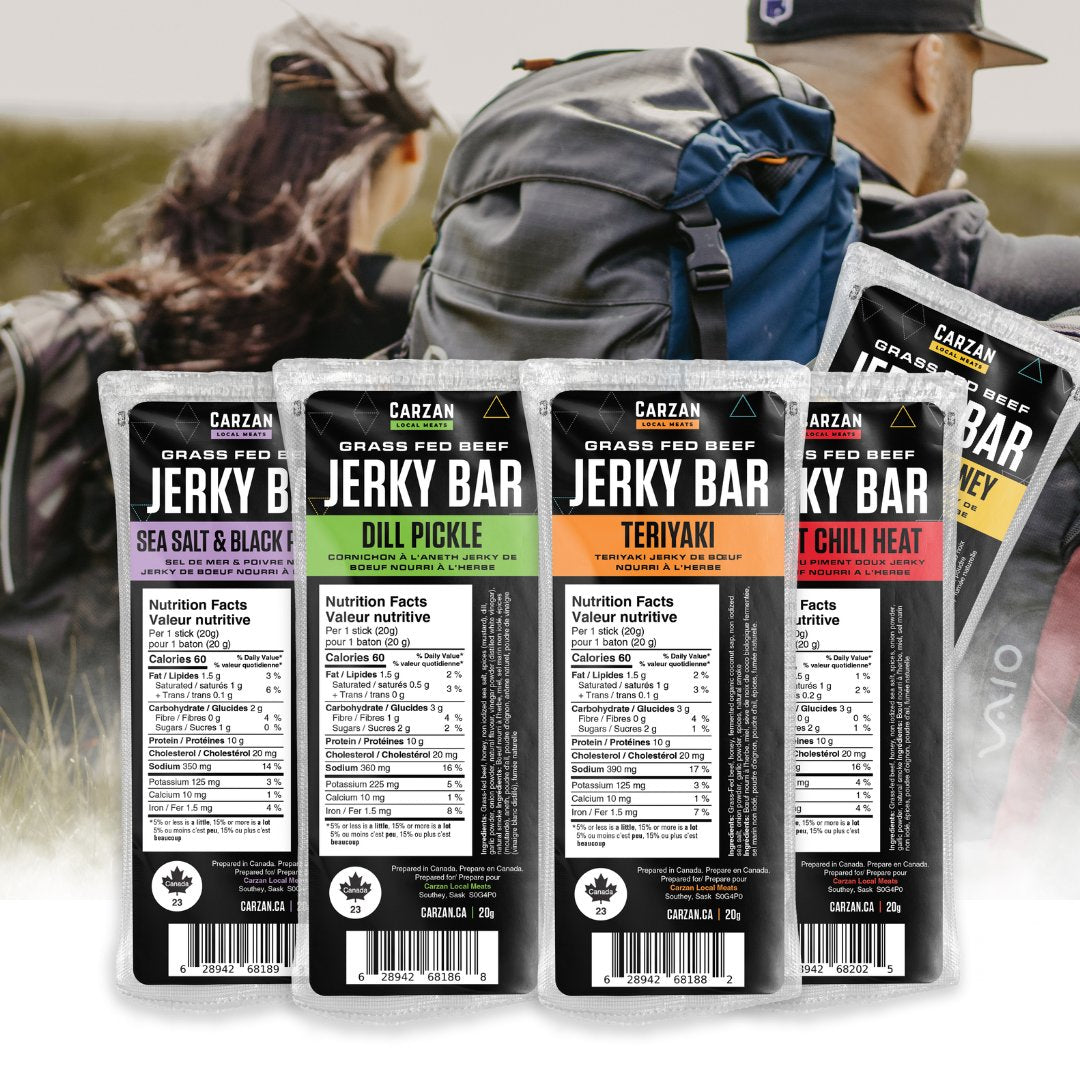
Carzan Jerky Bars: Beef. Sea Salt. Honey. Spices. That's it. 10g of protein. 5 ingredients. No powders, no gums, no sugar alcohols. Grass-fed & finished Canadian beef, naturally hardwood smoked. → See All Flavours — From $4.29
The Ingredient List Tells the Real Story
Take a look at the ingredient label on many protein bars and you’ll often see things like:
- whey protein isolate
- soy protein isolate
- pea protein concentrate
- maltitol or erythritol
- chicory root fiber
- xanthan gum
- carrageenan
- palm oil
These ingredients are used because protein powders don’t taste very good on their own and often need extra ingredients to improve flavour and texture.
Sweeteners like sugar alcohols are also frequently added to keep the sugar number low on the nutrition label while still making the bar taste sweet.
However, sugar alcohols can cause digestive discomfort for some people, especially when eaten regularly or in larger quantities.
Many Protein Bars Contain More Sugar Than You Expect
Another surprise for many consumers is how much sugar some protein bars actually contain.
Some bars contain as much sugar as candy bars, especially those marketed as “energy” or “meal replacement” bars.
Even bars that claim to be low sugar may still rely heavily on:
- syrups
- artificial sweeteners
- sugar alcohols
These ingredients help create the sweet taste people expect from a snack bar.
But it also means many protein bars are closer to processed desserts with added protein than they are to whole-food snacks.
Not All Protein Is Created Equal
Another important difference is the quality and source of protein.
Protein bars often use powdered or isolated proteins such as:
- whey isolate
- soy protein
- pea protein
- collagen protein
While these ingredients can contribute to protein intake, their digestibility and amino acid balance can vary depending on the source and processing method.
Beef, on the other hand, naturally contains all nine essential amino acids, making it what scientists call a complete protein source.
Because jerky bars use real meat rather than protein powders, the protein comes packaged with the natural nutrients found in beef.
Why Many Protein Bars Need Flavour Enhancers
Another challenge with protein bars is taste.
Protein powders often have a chalky or bitter flavour on their own. That’s why manufacturers frequently add:
- artificial flavours
- sweeteners
- stabilizers
- emulsifiers
These ingredients help mask the taste and improve texture.
Without them, many protein bars would taste dry, chalky, or overly dense.
Jerky bars take a different approach.
Instead of trying to disguise protein powder, they rely on the natural flavour of beef, salt, and spices.
A Nutrition Comparison
Here’s a general comparison of typical nutrition profiles.
| Nutrition | Beef Jerky Bar | Typical Protein Bar |
|---|---|---|
| Protein | 10–15g | 15–20g |
| Sugar | 0–5g | 5–20g |
| Ingredients | Usually under 10 | Often 20+ |
| Processing | Minimal | Highly processed |
| Artificial Ingredients | None | Common |
(Exact values vary by brand.)
While protein bars may contain slightly higher protein numbers on the label, jerky bars often offer cleaner ingredients and simpler nutrition.
Why More People Are Choosing Real Food Snacks
Consumers are becoming increasingly aware of how heavily processed many modern “health foods” have become.
Instead of looking for the snack with the biggest marketing claims, more people are choosing snacks that are:
- high in protein
- low in added sugar
- made with simple ingredients
- minimally processed
That shift has helped drive renewed interest in snacks like beef jerky and jerky bars, which offer protein from real food instead of powders.
The Bottom Line
Protein bars can be convenient, but many are also highly processed snacks packed with sweeteners, additives, and protein powders.
Beef jerky bars offer a simpler alternative.
Real meat.
Real protein.
Fewer ingredients.
Sometimes the best nutrition solution isn’t a new invention.
It’s simply going back to real food.
Ready to Ditch the Powder and Eat Real Food?
Carzan Jerky Bars are made with 5 ingredients — not 25. Grass-fed & finished Canadian beef, sweetened with Saskatchewan honey, naturally hardwood smoked. No protein isolates. No sugar alcohols. No ingredient you can't pronounce.
10g of protein. Real food. Ships across Canada.
→ Try a Single Bar — $4.29
→ Stock Up — Variety Packs From $48.99
→ Bulk Orders — Cases of 100